by ibby
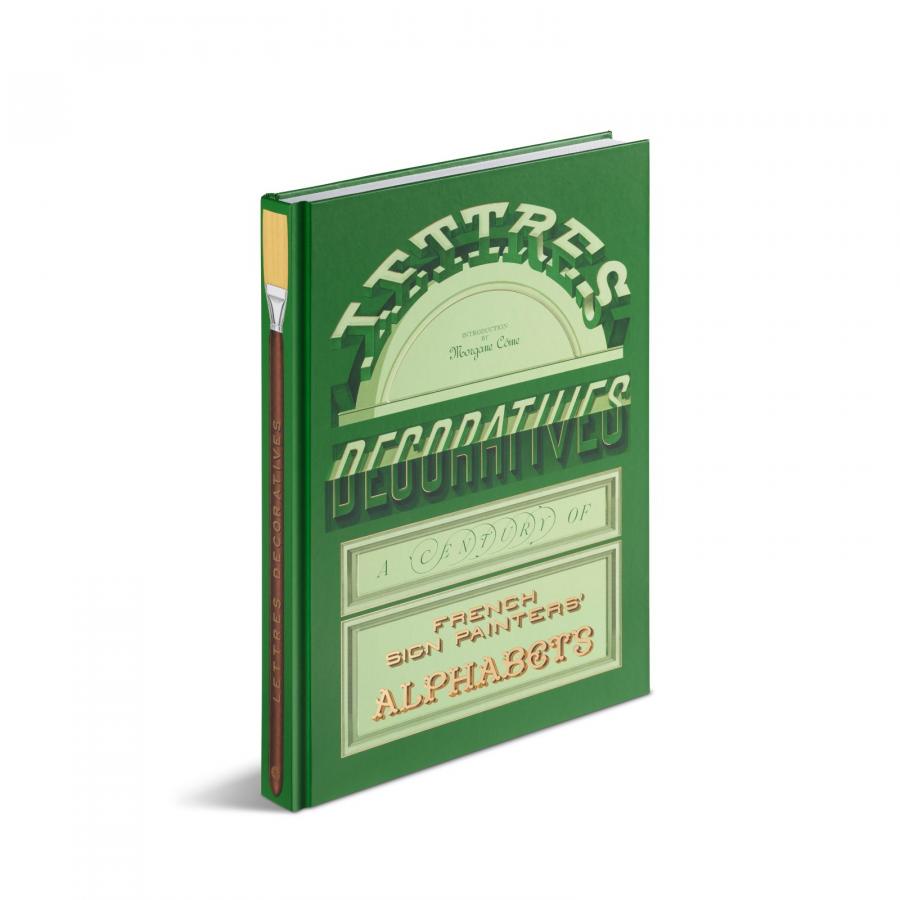
A gorgeous coffee table book from Letterform Archive exploring a century of French sign painting and chromolithographic alphabets.
There’s something enduring about hand-painted lettering. It carries weight, texture, and a certain human precision that digital type often tries to emulate but rarely replicates. Lettres Décoratives: A Century of French Sign Painters’ Alphabets, a new release from Letterform Archive, brings that legacy back into focus with remarkable clarity.
Spanning a full century of visual culture, the book gathers more than 150 plates sourced from rare chromolithographic albums published between the 1830s and 1930s. These weren’t just decorative references. They were working tools for sign painters—guides, portfolios, and quiet showcases of craft. What emerges is a layered view of typography in motion, evolving alongside the streets it once animated.
The alphabets themselves move fluidly across styles. Classical forms sit next to expressive art nouveau curves and the structured geometry of art deco. Some feel familiar. Others push into more eccentric territory, with dimensional treatments and ornamental flourishes that border on the surreal. It’s a reminder that sign painting has always been a space for experimentation, not just execution.
An introduction by sign painter Morgane Côme adds useful context, tracing the rise of the profession and the role these albums played in spreading visual ideas across regions. Period photography further grounds the work, showing how these letterforms lived in the wild—on storefronts, façades, and the everyday architecture of French cities.
The book’s design, by Violaine & Jérémy, respects the scale and intent of the original materials. Large-format reproductions allow the details to breathe, from subtle color transitions to the slight irregularities that make each alphabet feel alive. It’s less about nostalgia and more about continuity—how these forms still inform contemporary design thinking.
For designers, lettering artists, and anyone interested in the history of visual communication, Lettres Décoratives works both as a reference and a source of inspiration. It doesn’t try to reinterpret the past. It simply presents it, clearly and generously.
And in doing so, it makes a strong case that these painted letters, once made for the street, still have plenty to say.