by jeff
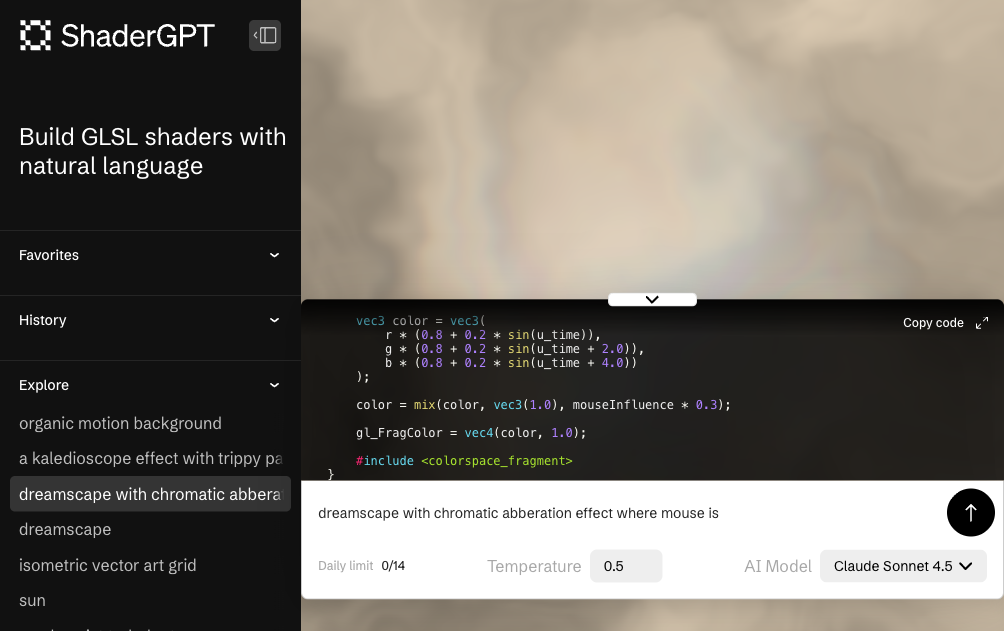
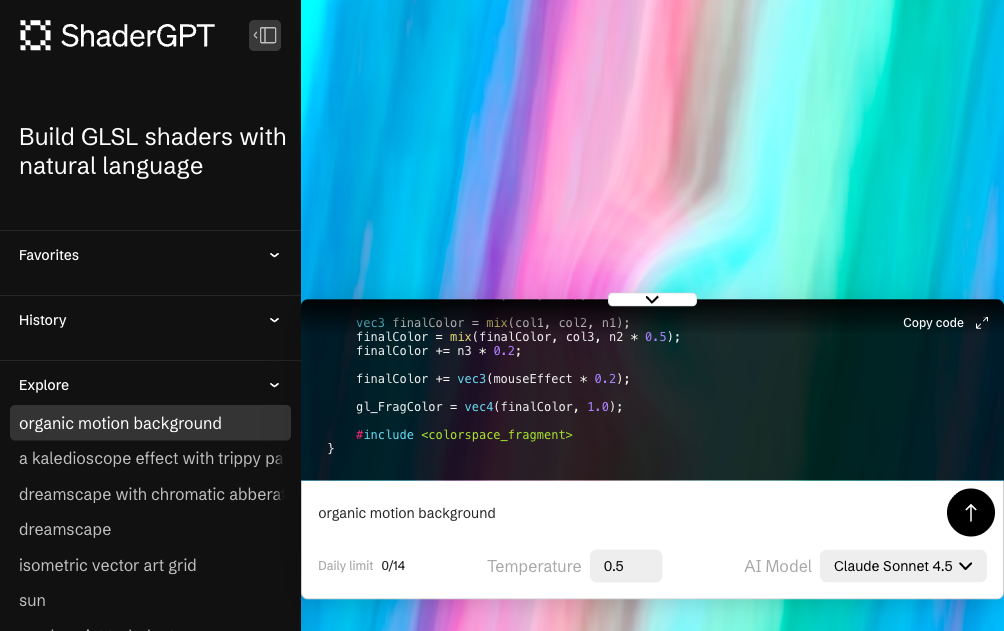
ShaderGPT by 14islands is a free AI shader generator tool. Describe a visual effect in plain English and it writes real GLSL code rendered live as WebGL.
Writing GLSL shader code has always been one of the most technically demanding skills in creative coding. The syntax is esoteric, debugging is difficult, and even small visual effects require deep knowledge of math and GPU rendering. ShaderGPT changes that equation. Built by Stockholm and Reykjavik-based creative agency 14islands, this AI shader generator lets anyone type a natural-language description and receive working fragment shader code in seconds.
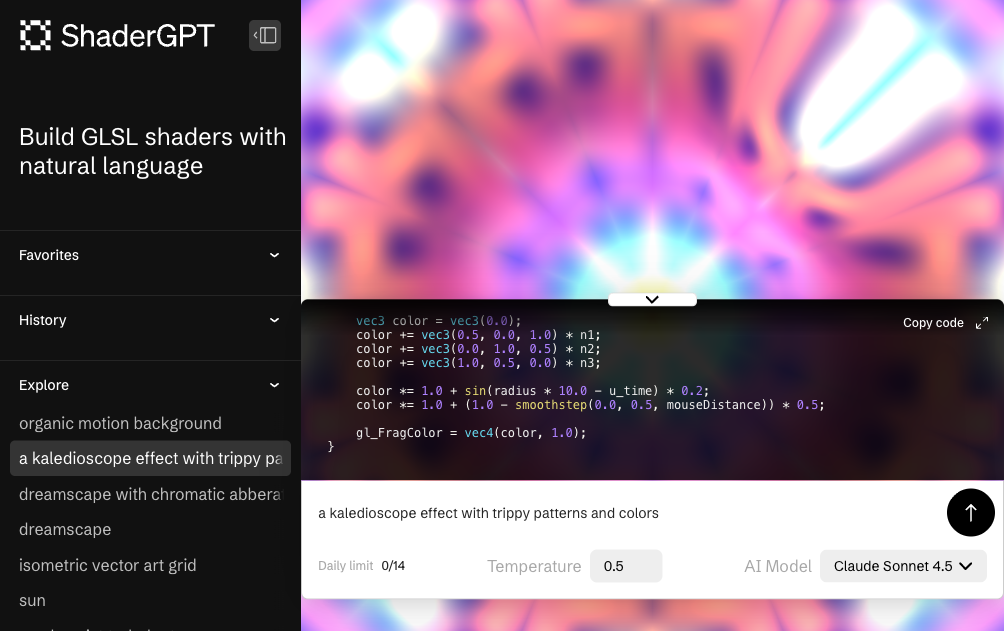
How the AI Shader Generator Works
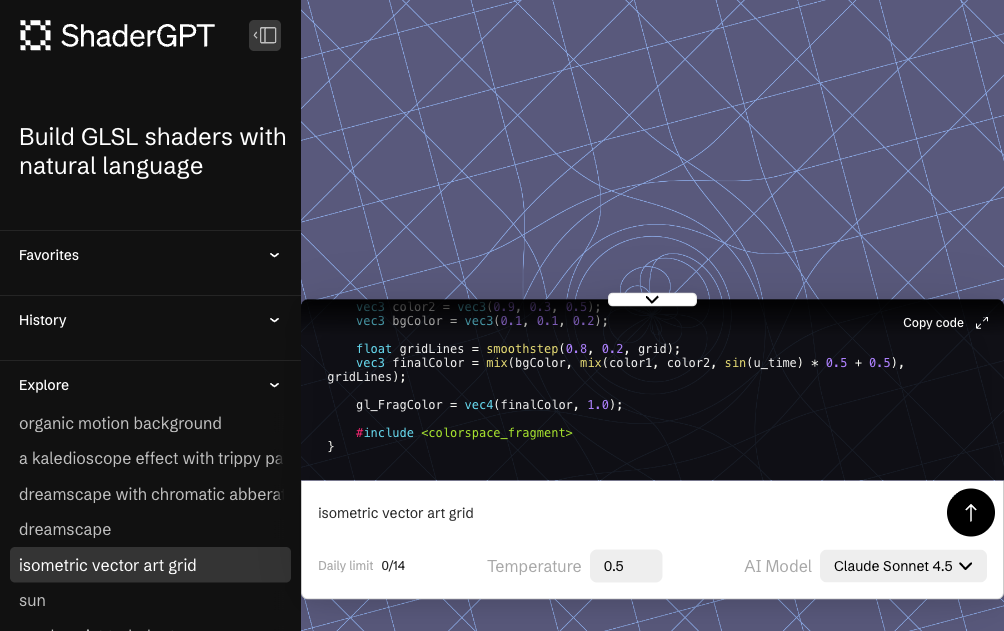
The interface is clean and direct. A text field accepts prompts like "organic motion background" or "kaleidoscope with trippy patterns." The selected AI model generates complete GLSL code that renders in real time on the right side of the screen. A built-in code editor displays the output with full syntax highlighting, and users can copy or modify the code directly. The tool supports multiple models including Claude, GPT-5, Gemini, and DeepSeek, each producing distinct visual results from the same prompt.
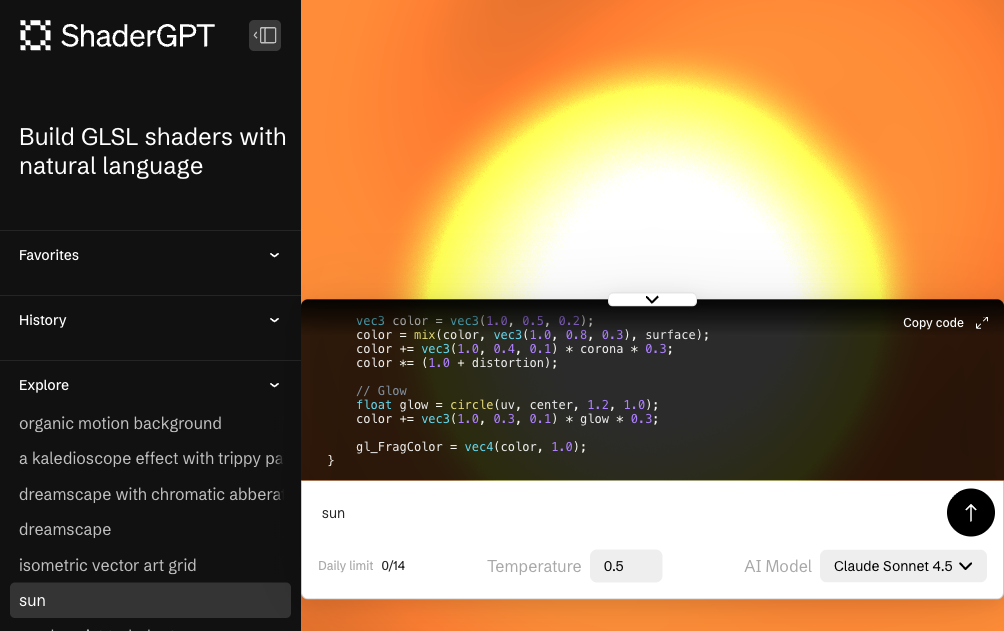
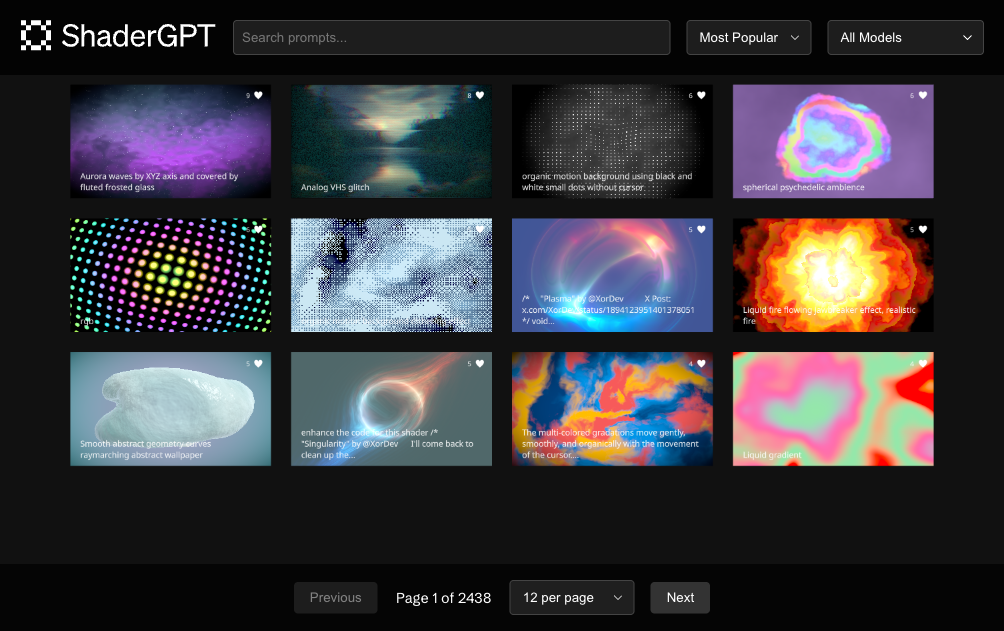
What sets this AI shader generator apart from other code tools is its focus on visual output. Every generated shader runs immediately as a live WebGL preview. Mouse interaction is baked into many outputs, with effects responding to cursor position and movement. The explore gallery already holds over 2,400 community-created shaders, ranging from aurora waves and VHS glitch effects to volumetric smoke and liquid fire simulations.
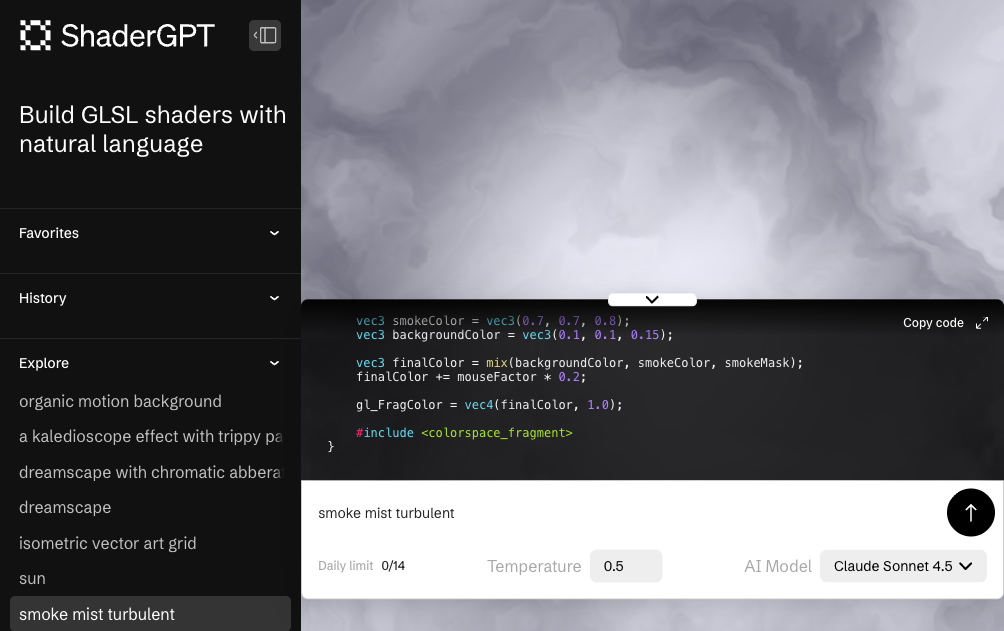
David Lindkvist, Creative Tech Director at 14islands, notes that Claude emerged as the most consistent performer during testing. The team found that fine-tuning system prompts and asking models to plan before execution reduced compilation errors significantly. Temperature adjustments also produced notably different creative results from the same input. For designers curious about shader art but intimidated by GLSL, this AI shader generator offers a practical starting point that feels more like sketching than programming.